.png)
RISE OF MACHINES: The Fourth Industrial Revolution | by Dheeraj Gautam

Introduction
The term Fourth Industrial Revolution was coined by Klaus Schwab, the founder and executive chairman of the World Economic Forum. It is also referenced as Industry 4.0 or 4IR.
Schwab wrote a book with the title 'The Fourth Industrial Revolution' to describe the era marked by a “Technological revolution… that is blurring the lines between the physical, digital, and biological spheres.” He described Fourth Industrial Revolution as “a current and developing environment in which disruptive technologies and trends such as Robotics, The Internet of Things, Virtual Reality and artificial Intelligence are changing the way people live and work.”
So this is the era of AI, machine learning, genome editing, 3D printing augmented reality, autonomous vehicles and much more. These things are currently affecting our personal and work lives and they are ever-evolving.
Technologies like artificial intelligence, autonomous vehicles or the internet of things are becoming ingrained in our day-to-day lives, and even our bodies. Think of voice activated virtual assistants, face ID recognition or healthcare sensors.
Schwab first presented his vision of Fourth Industrial Revolution at the World Economic Forum’s Annual meeting in Davos in 2016. But to understand this idea we need to go much further back in history to First Industrial Revolution. The First Industrial Revolution started in Great Britain around 1760 and spread to North America and Europe through the early 1800s. It was powered by a major invention, the Steam Engine, which resulted into the creation of factories, new manufacturing processes and a booming textile industry. From the late 1800s, the Second Industrial Revolution was marked by the mass production and new industries like steel, oil and electricity. The light bulb, the telephone and internal combustion engine were a few major inventions of this era. The Third Industrial Revolution, sometimes known as the Digital Revolution, occurred in the second half of the twentieth century. In just a few decades we saw the invention of the semi-conductor, the personal computer and the Internet.
What separates the Fourth Industrial Revolution from the Third?
The main difference between these two is that technology is merging with our lives more than ever and technological enhancements are accomplishing new milestones.
Consider this- It took 75 years for 100 million users to adopt the telephone. Instagram signed up 100 million users in just two years, while Pokémon Go caught the same number of users in one month. 3D printing is just one example of fast-paced technology in the Fourth Industrial Revolution. The industry has transitioned from just an idea to a big business, with 3D printer shipments expected to increase from just 0.2 million in 2015 to 2.4 million in 2020. Today, you can have a hip replacement from a 3D-printed bone or use a 3D-printed bionic arm. It’s like talking about blurring the line between humans and technology.
“The Fourth Industrial Revolution, finally, will not only change what we do but also who we are. It will affect our identity and all the issues associated with it: our sense of privacy, our notions of ownership, our consumption pattern, the time we devote to work and leisure and how we develop our careers, cultivate our skills, meet people, and nurture relationships.”-Klaus Schwab
Changes for Better
This new era of technology is driving a lot of innovations. The number of patents related to Fourth Industrial Revolution, for things like 3D printing or AI, have been climbing up since early 2000. Organizations are embracing new technologies to make their businesses more efficient, similar to how they embraced the steam engine during the First Industrial Revolution.
Technology has made possible new products and services that increase the efficiency and pleasure of our personal lives. Booking a cab or a flight, buying a product, making a payment, listening to music, watching a film, playing a game, and even controlling the lights and temperature in a house- any of these tasks can be accomplished within minutes and soon we'll have fully autonomous cars and who knows what else.
It will create a new market and growth opportunities. It will blend improvements from several fields that were often previously separated to create a new product or a new service.

Changes for Worse
While the Fourth Industrial Revolution has the power to change the world positively, we have to be aware that the technologies can have negative consequences if we don’t think about how they can change us.
The risk is that the Fourth Industrial Revolution is increasing inequalities. A study has found that the billionaires have driven almost 80% of the 40 main breakthrough innovations over the last 40 years. That’s the problem when the richest one percent of households already own nearly half of the world’s wealth.
Experts warn that we are in a “winner-takes-all” economy, where high-skilled workers are rewarded with high pay, and the rest of the workers are left out. Studies confirm technologies like AI will eliminate some jobs and create demand for new skills that many workers don’t have. Businesses and government need to adapt to the changing nature of work by focusing on training people for upcoming new jobs. Talent development, lifelong learning and career reinvention are going to be critical to the future workforce.
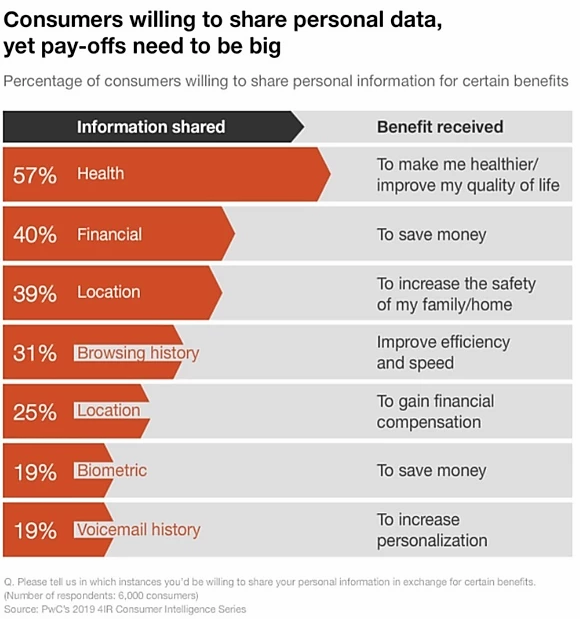
Privacy concerns are another issue as the Fourth Industrial Revolution turns every company into a tech company. Industries from food to retail to banking are going digital, and they are collecting a lot more data from their customers along the way. Users are starting to worry that companies know too much about their private digital lives.
Artificial Intelligence, Robotics, bioengineering and other technologies can be used to deploy weapons.
The government and some companies, are struggling to keep up with the fast pace of technological enhancements. Research shows that innovators, investors and shareholders prosper the most from innovations. The World Economic Forum says that a majority of leaders are not confident about whether their organizations are ready for the changes associated with the Fourth Industrial Revolution or not.
“We have to win this race between the growing power of technology, and the growing wisdom with which we manage it. We don’t want to learn from mistakes.” -Max Tegmark, Life 3.0
With tech changing fast every day – it’s time to catch up.
Bringing it all Together
The innovations in Artificial Intelligence, biotechnology, robotics and other emerging technologies are going to redefine what it means to be a human and how we engage with others. Our capabilities, potential and identities will evolve along with the technologies we create.
We must recognize and scale down the negative impacts, especially in the area of equality, employment, privacy and trust. We must design these technologies in such a manner that they should help in preserving what’s important to us. This effort requires participation of all stakeholders – governments, International organizations, policymakers and society – to work together and control the powerful emerging technologies in a way to limit the risk and create a better world for the mankind. The world we create through technologies can shape our lives and is the one we will pass on to the next generations.
“The Fourth Industrial Revolution can compromise humanity’s traditional sources of meaning – work, community, family, and identity – or it can lift humanity into a new collective and moral consciousness based on a sense of shared destiny. The choice is ours.” -Klaus Schwab


Comments